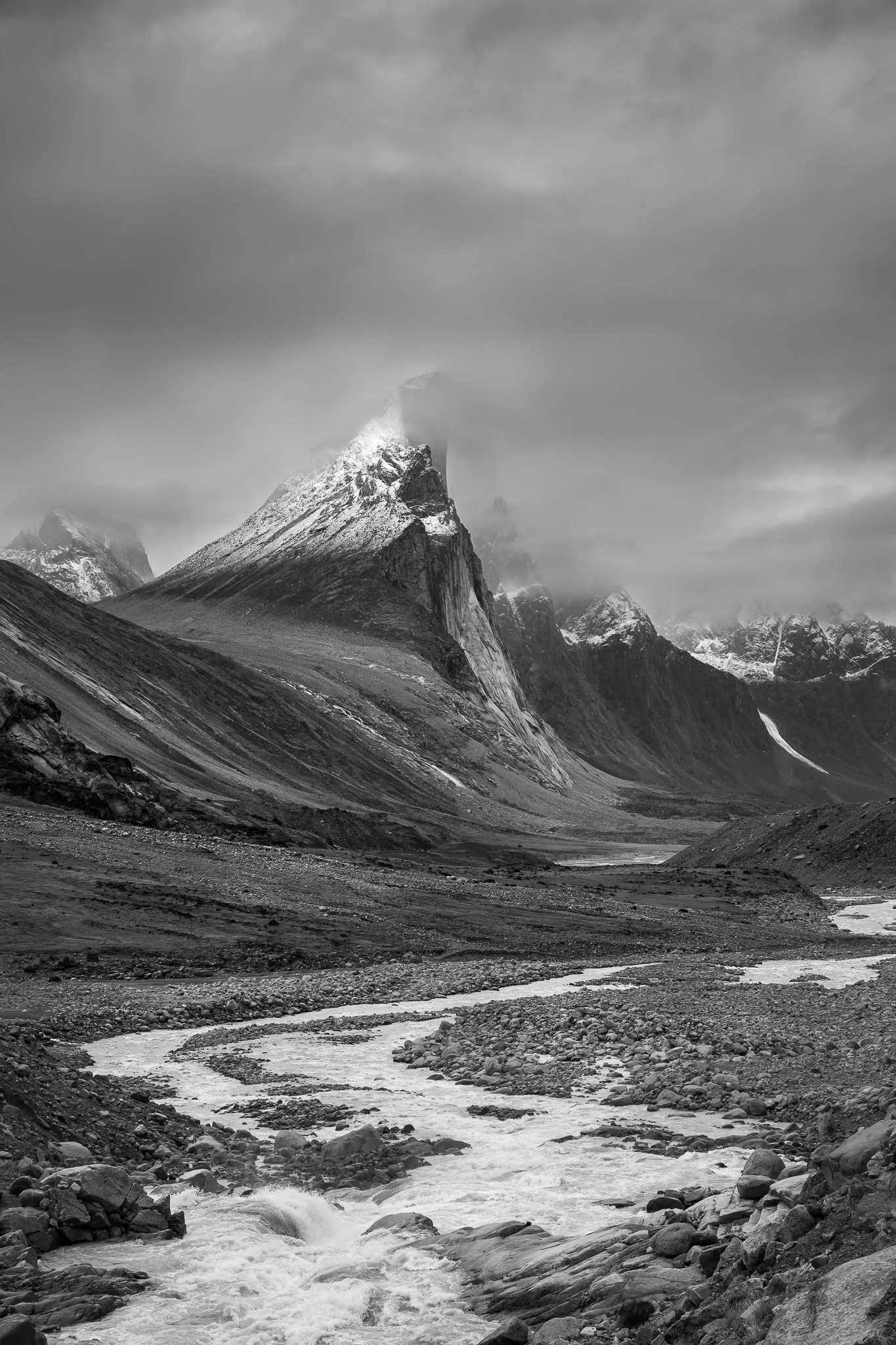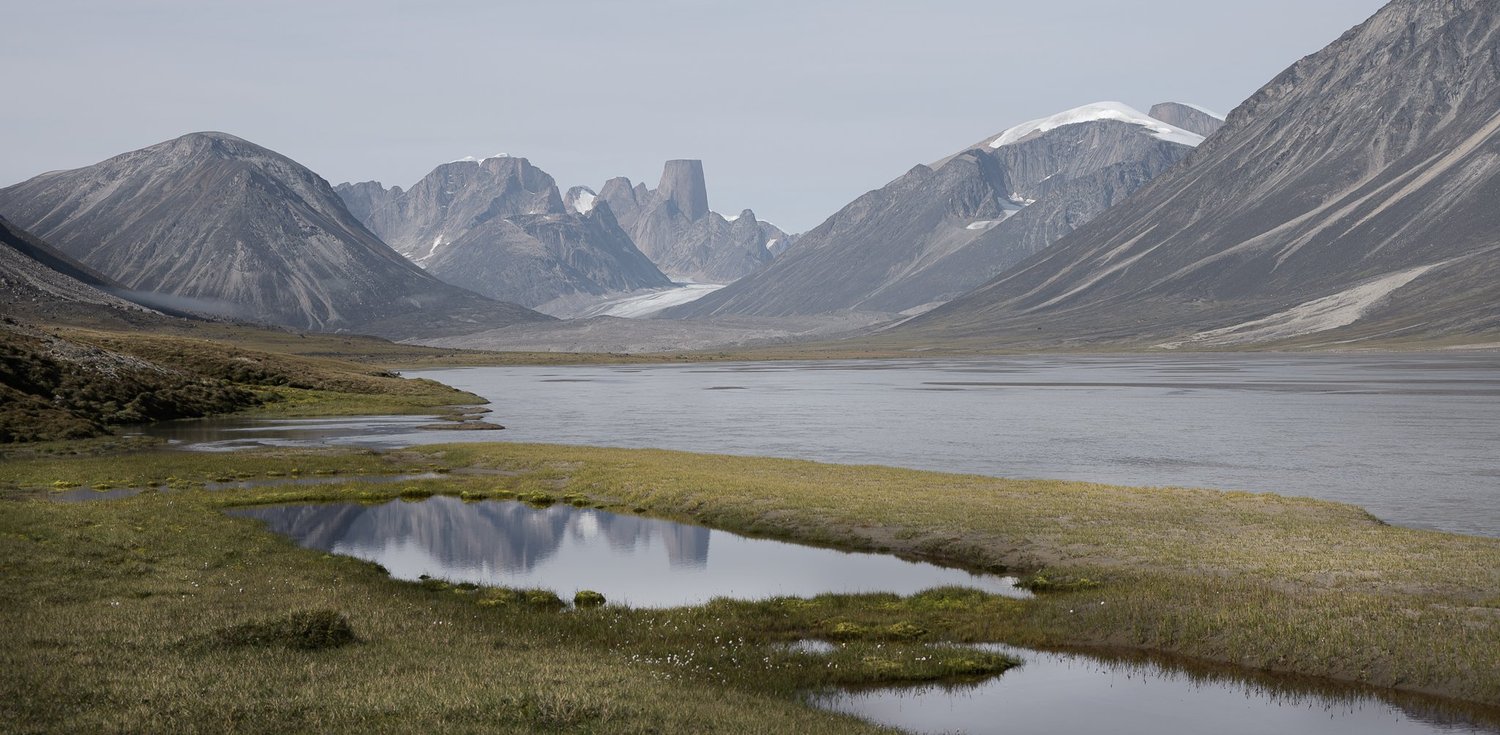
Three flights and a three-hour boat ride brought us to North Pangnirtung Fiord, where Karin, Dave, Martin and I shouldered our packs for twelve days on foot. Ahead of us lay roughly 100 kilometres through Akshayuk Pass in Auyuittuq National Park. Somewhere down the pass were two mountains I’d been looking forward to seeing, Mount Asgard and Mount Thor. First, we had to get through the bog.
The slow way into Akshayuk Pass
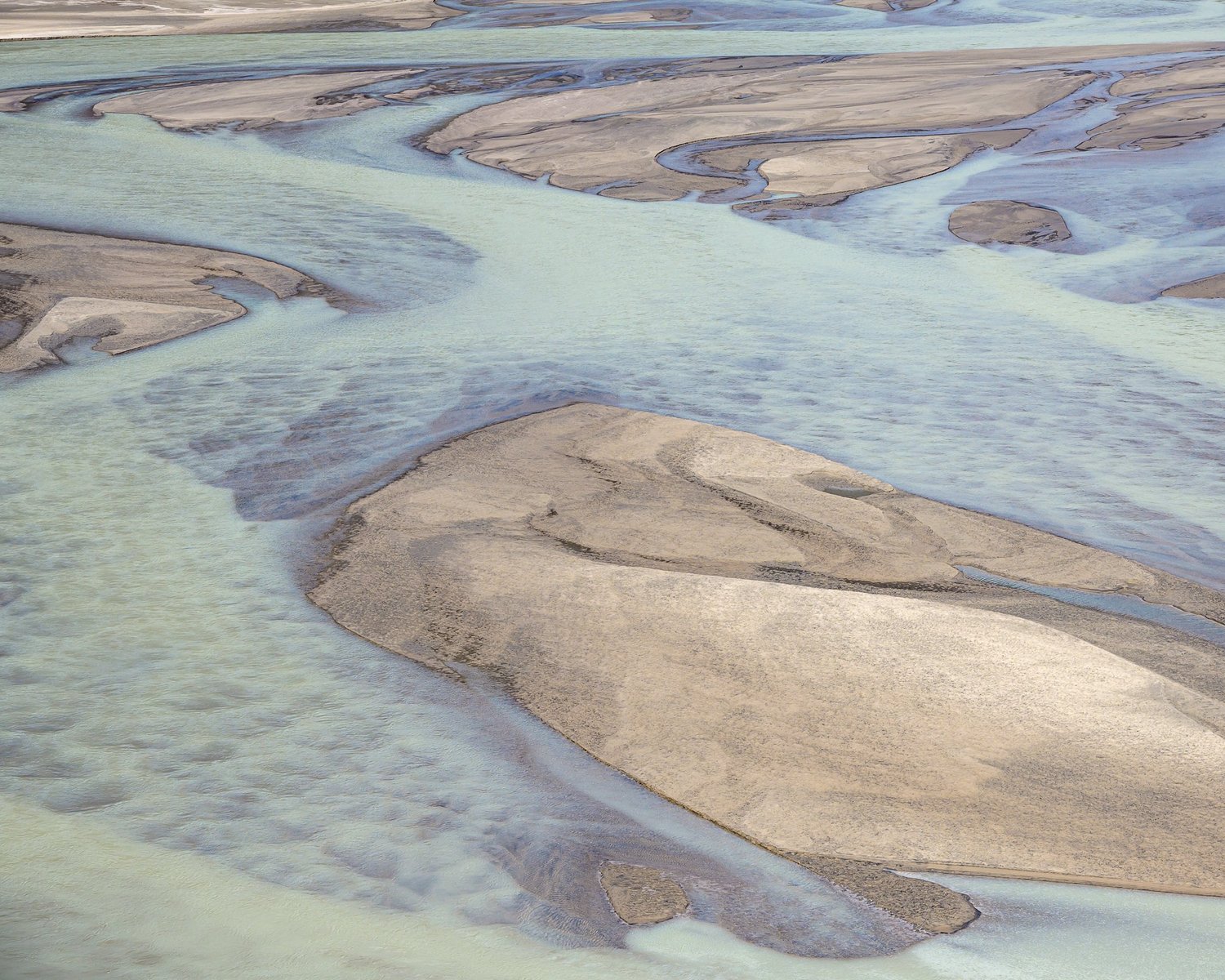
The first half of the trip was the hardest going. There wasn’t a great deal of climbing, which made it look fairly straightforward on paper. On the ground, a flat stretch could mean picking our way across wet tundra, looking for a bit of firm footing, then finding ourselves on loose rock. With a full pack and no clear trail in places, a kilometre could take considerably longer than you’d think.
One thing that helped was a food cache we’d arranged to have dropped off at Summit Lake the spring before the trip. It was expensive, but I was glad we’d done it. We could start with enough food to get us to the lake and pick up the rest there. That made the packs a little more manageable on the boggy ground, which was exactly where I appreciated the weight savings most.
The river crossings had been on my mind well before we left. A river can look quite manageable from the bank, but it’s hard to judge how much force there is in the current until you’re standing in it. Add loose stones, a heavy pack and very cold water, and you can see why I’d spent a fair bit of time thinking about them. Rain and glacial melt can change a crossing considerably, too. As it turned out, the ones we came to were quite manageable. I was happy to have worried about them more than I needed to.
We had five days of clear skies at the start, about as good a run of weather as we could have hoped for. The second half gave us some strong winds and rain. Twelve days is a fair bit of time to spend together when everyone’s carrying a heavy pack and some days are slow going. Karin, Dave and Martin did great through all of it. I was glad to be out there with them.
Mount Asgard and Mount Thor
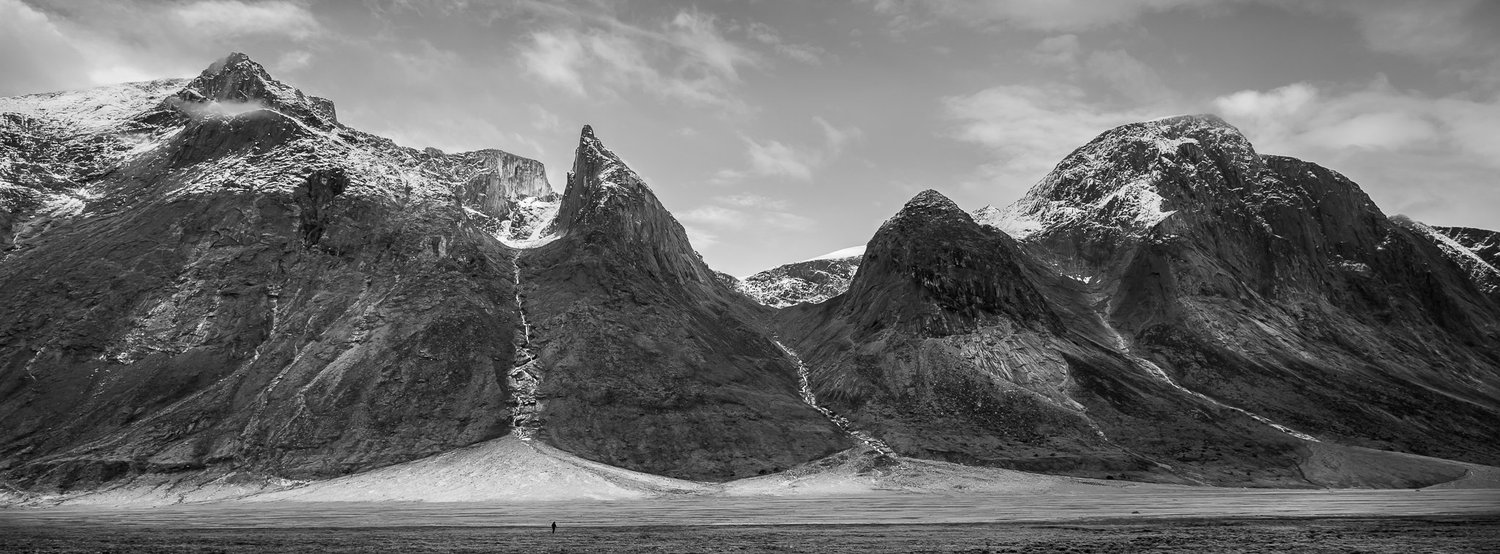
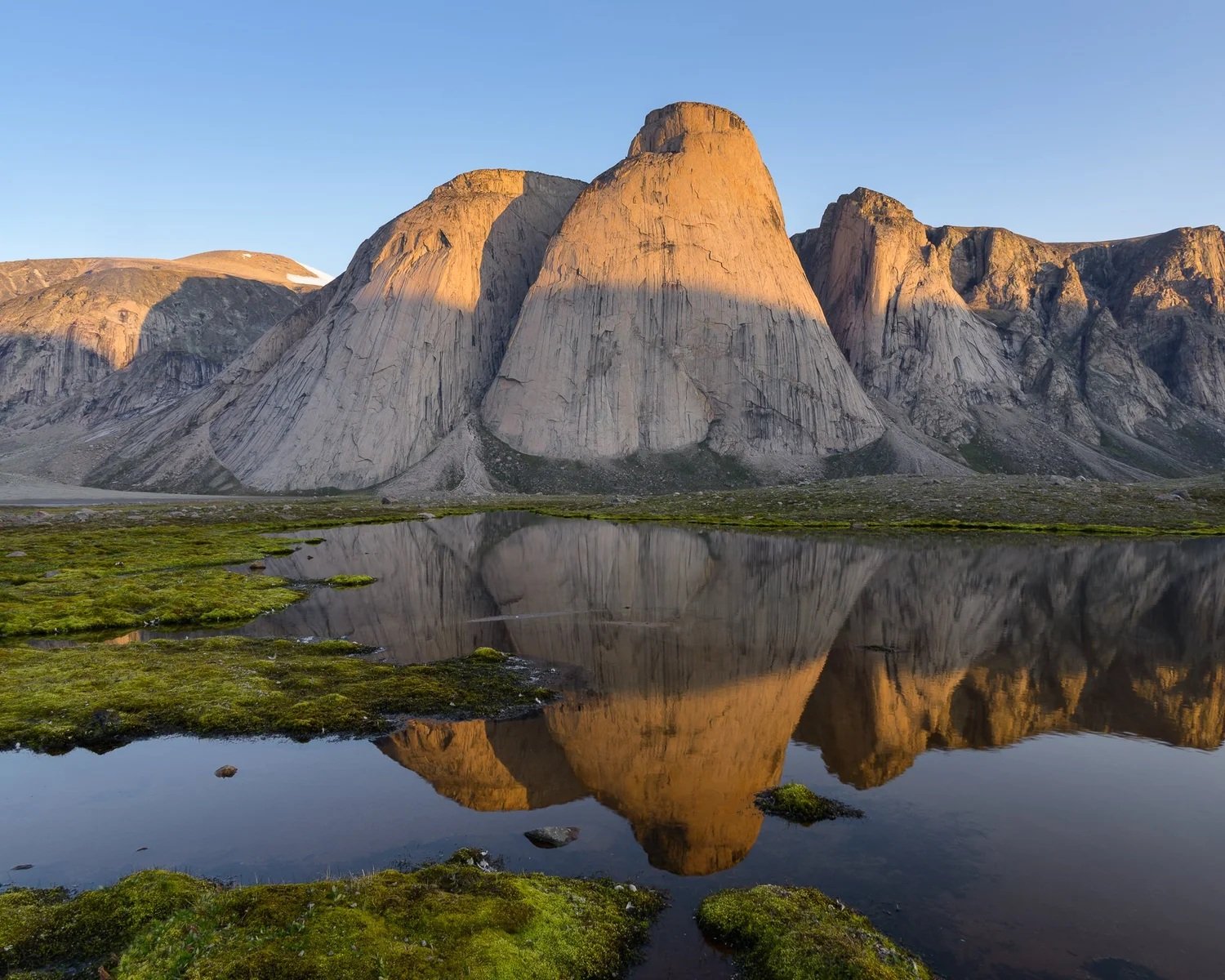
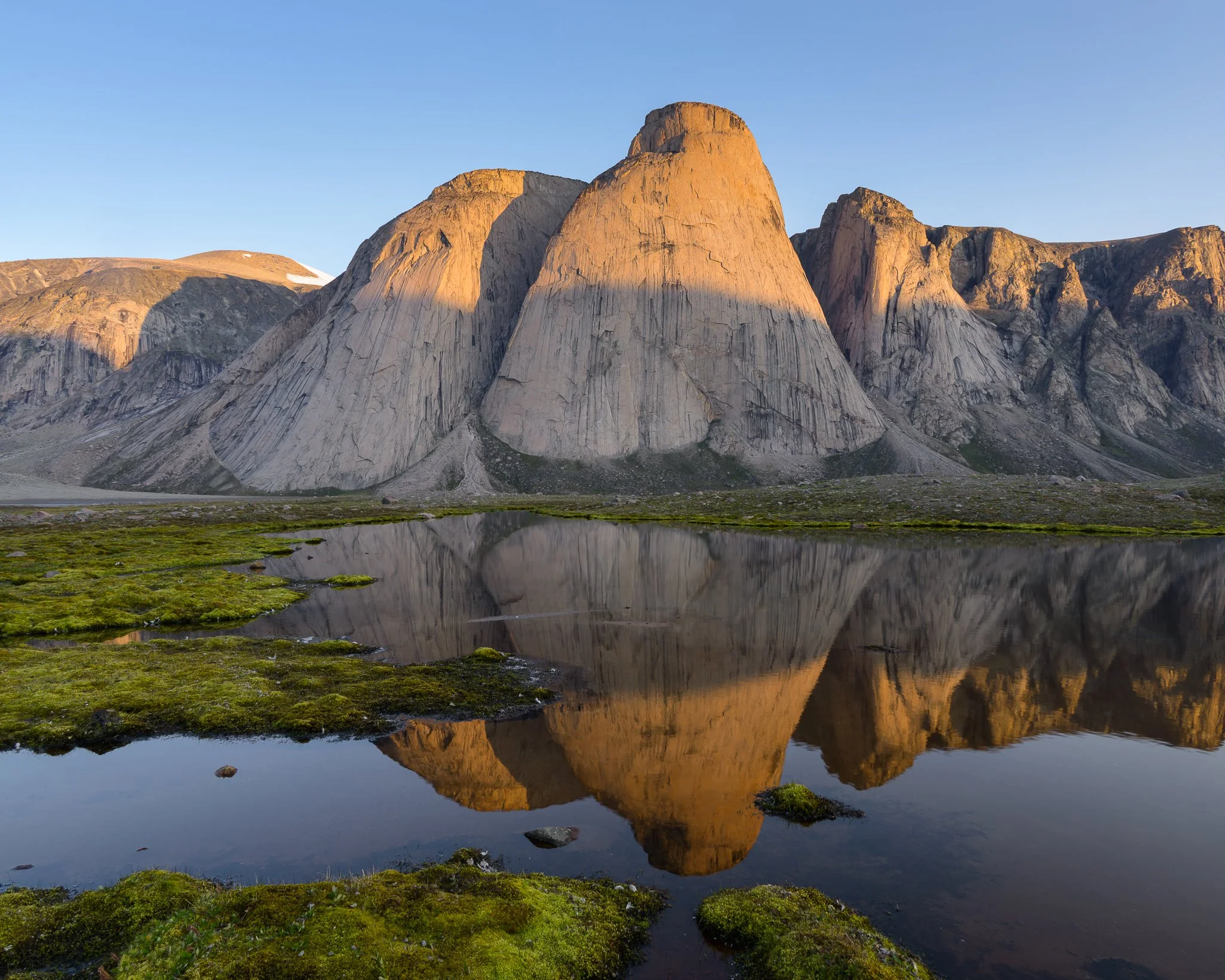
Mount Asgard has a shape you could pick out from a simple outline. A massive, flat-topped tower rises above equally impressive monolithic cliff faces. There’s something almost improbable about that broad, level top sitting above such steep walls. From a photography point of view, it’s a lovely shape to work with. You can give it quite a small place in the frame and still know immediately which mountain you’re looking at.
Mount Thor had me looking at the rock differently. Its west face is a single sweep of granite with a drop of 1,250 metres, the greatest vertical drop in the world according to Guinness World Records. The wall actually leans out by an average of 15 degrees past vertical. Having spent a good part of my life climbing, I find it hard to look at a wall like that without wondering where you’d start, what line you’d follow, and how it would feel to look down halfway up. As a photographer, I had a different problem. How do you get even a little of that feeling into a photograph?
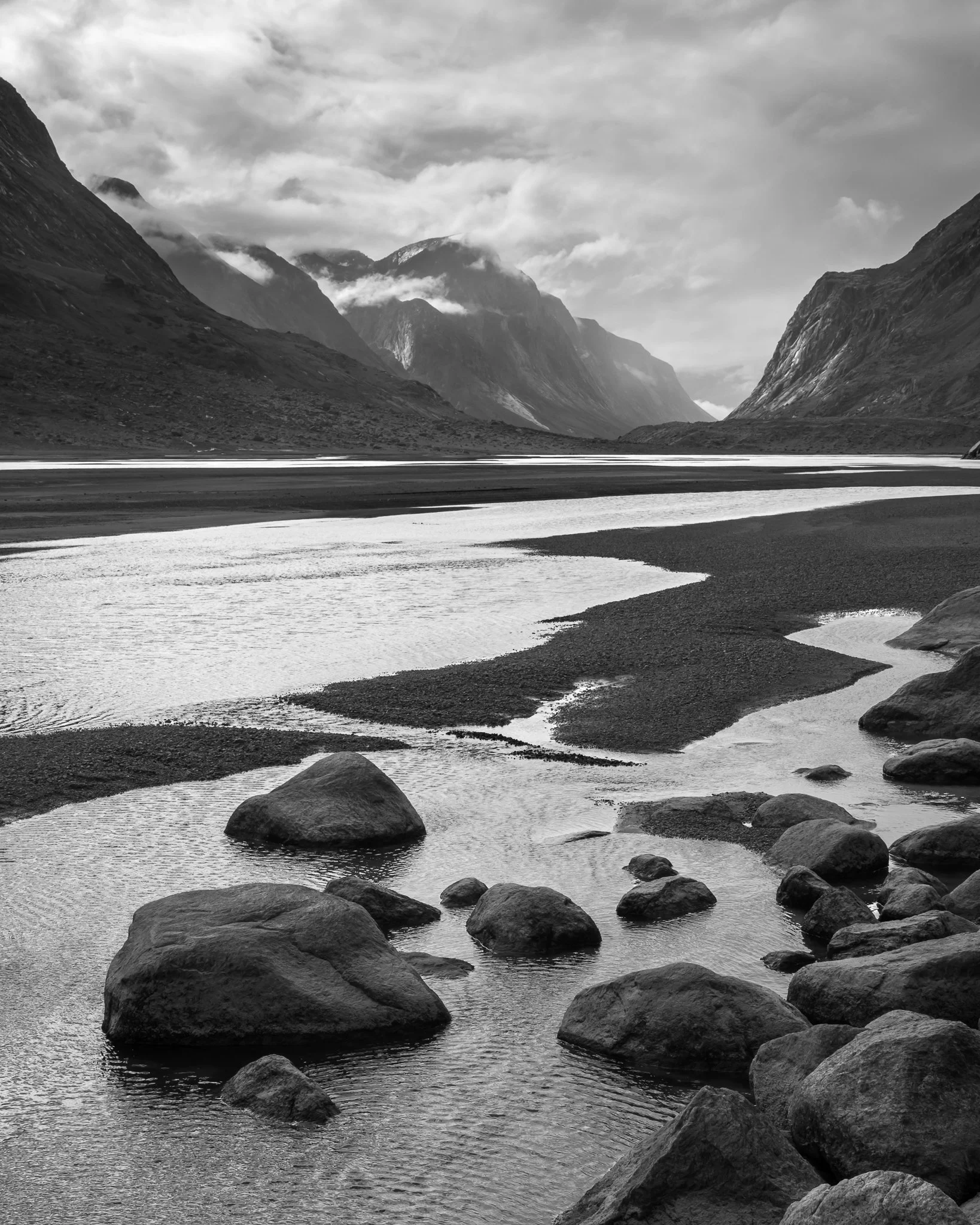
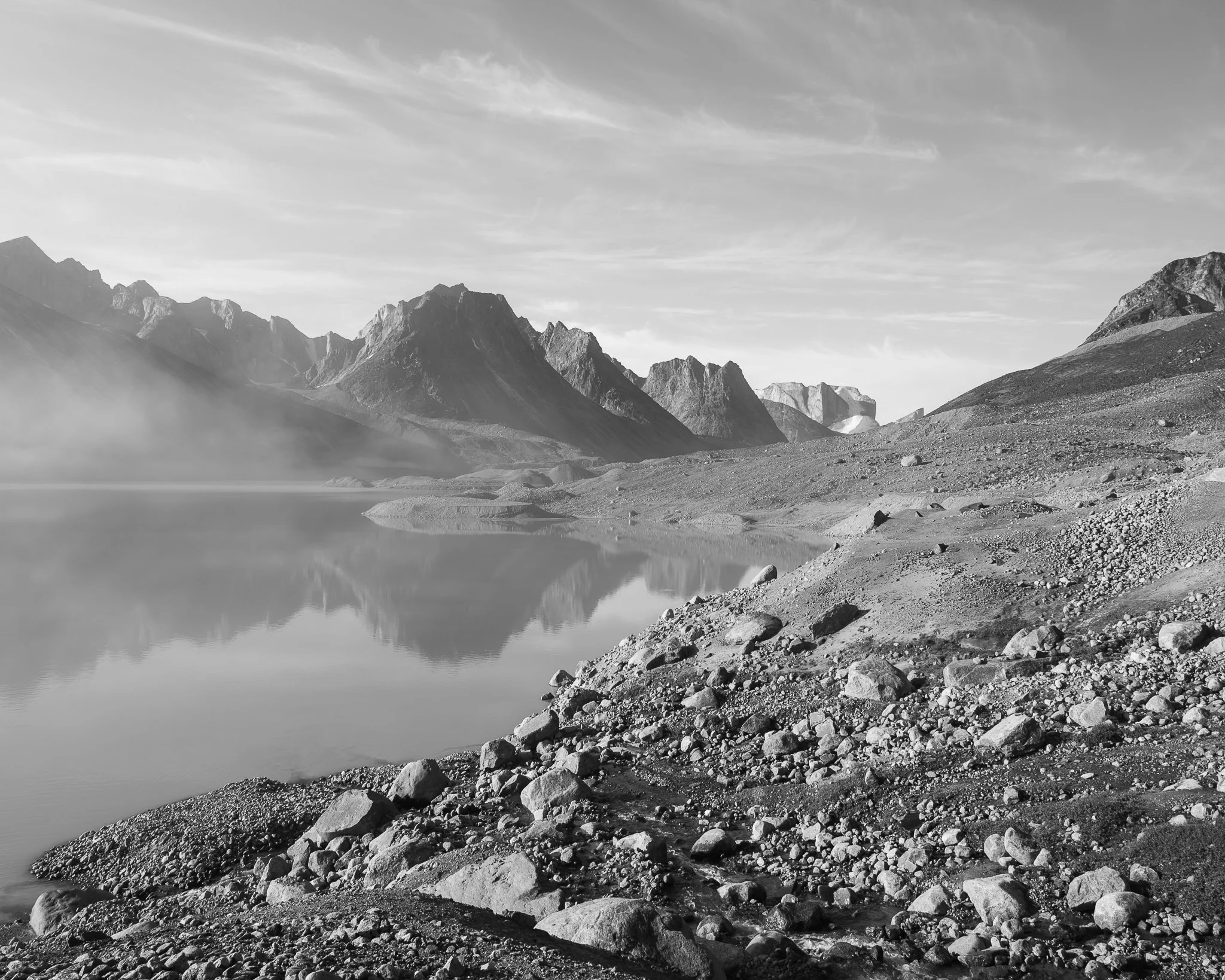
For the first five days we had clear skies, which was lovely for walking and a bit trickier for photography. With hardly a cloud in the sky, I decided to work in black and white. It suited the shapes of the mountains and the way the light picked out the rock faces.
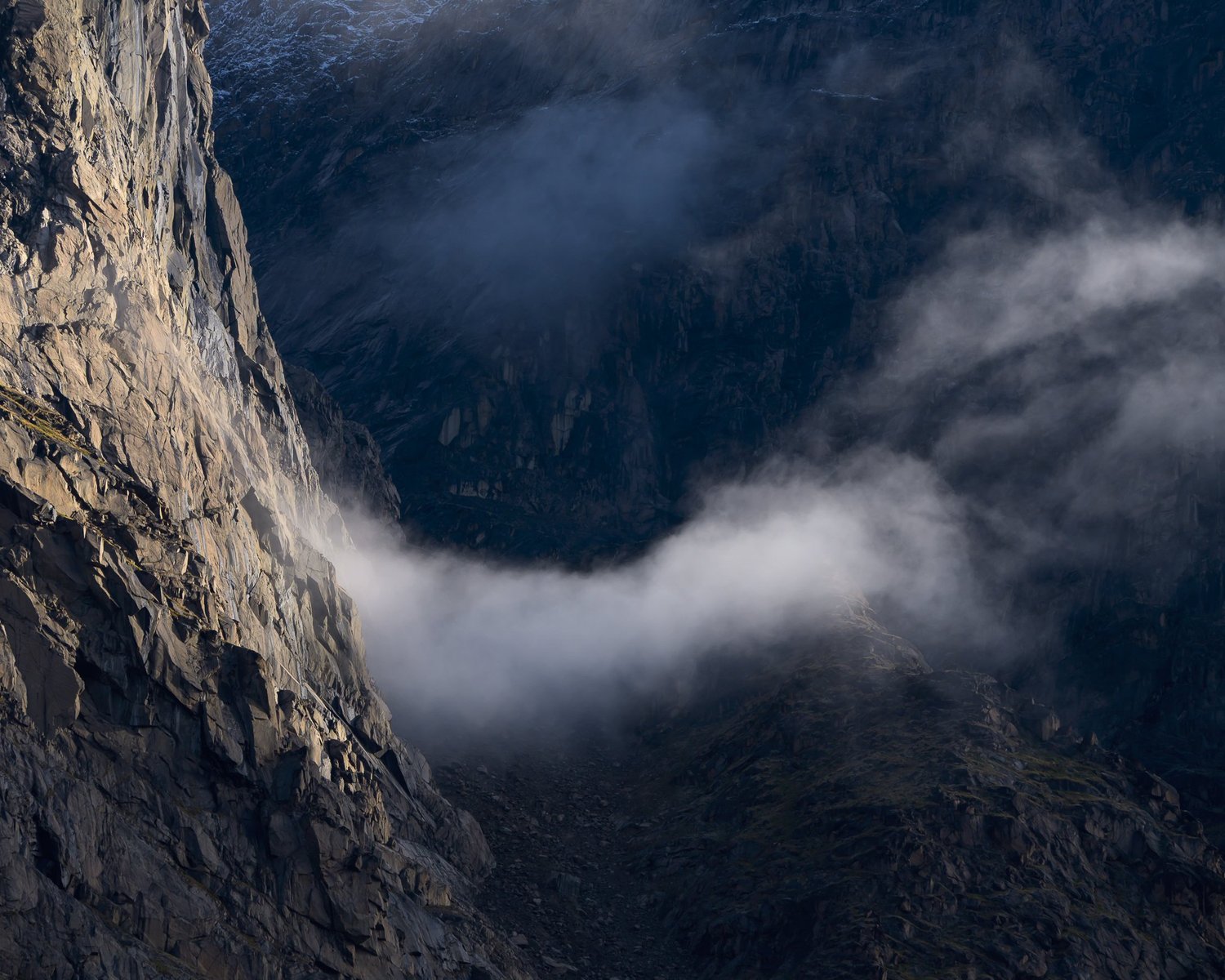
Once the rain came in, it was mostly a matter of waiting. The summits would disappear into the cloud, and every now and then a gap would open up, and one of those great peaks would come back into view. Sometimes it was only there for a moment. I enjoyed that part, keeping an eye on the clouds and seeing what might emerge next. It was challenging photography, and I’d love to go back and give it another shot.
A lighter kit for twelve days
I took the Nikon Z5II and a Nikon 24–200mm lens. I wanted to keep the weight down, and that one lens gave me enough range to go from a broad view of the valley to a small patch of light on the far side. I was happy to have that choice without a second lens in the bag.
For the films, I used a DJI Osmo Action 6 with the battery handle. That little setup worked brilliantly for this trip. It was light enough to carry alongside the Nikon, and I was surprised by how long the batteries lasted. It was good to have a camera I could pull out quickly when I wanted to show a bit of the terrain or how the weather was changing, and to spend so little time thinking about charging it.
Two videos from the trip
The photographs are where I get to spend time with light or the shape of a mountain. The videos give you more of what it was like to get there. The first follows us into Akshayuk Pass, through the wet ground and slow walking of those early days. The second picks up as the weather changes, and we make our way through the rest of the pass.